
Mouse Secondary Antibodies


Biotium Clathrin, Heavy Chain (CLTC/1431), Biotin conjugate, 0.1mg/mL
This antibody recognizes protein of 192 kDa, which is identified as Clathrin Heavy Chain. Clathrin is composed of three heavy chains and three light chains, which associate non-covalently to form a triskelion structure. Clathrin heavy chain (HC) is composed of a terminal globular domain, a distal segment and a proximal segment containing a light chain-binding site. The proximal segment of the Clathrin HC protein is essential for interactions between Clathrin heavy chains and light chains, which result in the formation of the triskelion structure.Primary antibodies are available purified, or with a selection of fluorescent CF Dyes and other labels. CF Dyes offer exceptional brightness and photostability. Note: Conjugates of blue fluorescent dyes like CF405S and CF405M are not recommended for detecting low abundance targets, because blue dyes have lower fluorescence and can give higher non-specific background than other dye colors.


Biotium ASRGL1 (Asparaginase Like 1) (CRASH/1289), CF488A conjugate, 0.1mg/mL
ASRGL1 (Asparaginase-like protein 1), also known as CRASH, is a 308 amino acid protein belonging to the Ntn-hydrolase family. Asparaginases utilize asparagine as a substrate to produce aspartic acid and ammonia. ASRGL1 has been identified as a autoantigenic protein that is present in the mid-piece of sperm after obstruction of the male reproductive tract. ASRGL1 is expressed highly in testis, but is also expressed in brain, kidney and gastrointestinal tissues. High levels of ASRGL1 have also been identified in ovarian, uterine and mammary tumors in comparison with normal tissues of the same origin.Primary antibodies are available purified, or with a selection of fluorescent CF Dyes and other labels. CF Dyes offer exceptional brightness and photostability. Note: Conjugates of blue fluorescent dyes like CF405S and CF405M are not recommended for detecting low abundance targets, because blue dyes have lower fluorescence and can give higher non-specific background than other

Biotium ASRGL1 (Asparaginase Like 1) (CRASH/1289), CF568 conjugate, 0.1mg/mL
ASRGL1 (Asparaginase-like protein 1), also known as CRASH, is a 308 amino acid protein belonging to the Ntn-hydrolase family. Asparaginases utilize asparagine as a substrate to produce aspartic acid and ammonia. ASRGL1 has been identified as a autoantigenic protein that is present in the mid-piece of sperm after obstruction of the male reproductive tract. ASRGL1 is expressed highly in testis, but is also expressed in brain, kidney and gastrointestinal tissues. High levels of ASRGL1 have also been identified in ovarian, uterine and mammary tumors in comparison with normal tissues of the same origin.Primary antibodies are available purified, or with a selection of fluorescent CF Dyes and other labels. CF Dyes offer exceptional brightness and photostability. Note: Conjugates of blue fluorescent dyes like CF405S and CF405M are not recommended for detecting low abundance targets, because blue dyes have lower fluorescence and can give higher non-specific background than other

Biotium Villin (GI-Mucosal & Urogenital Brush Border Marker)(VIL1/1314 + VIL1/2376), CF488A conjugate, 0.1mg/mL
Recognizes a protein of 95 kDa, which is identified as villin. It is a major constituent in the microvilli, which compose the brush border of epithelial cells forming absorptive surfaces of the intestinal and renal proximal tubular epithelia. Anti-Villin labels the brush border area in the gastrointestinal mucosal epithelium and urogenital tract. Among neoplasms, villin is predominantly expressed in tumors of colorectal origin. Antibody to villin is useful in identifying malignant cells from primary and metastatic colorectal carcinomas. This antibody also labels Merkel cells of the skin. Primary antibodies are available purified, or with a selection of fluorescent CF Dyes and other labels. CF Dyes offer exceptional brightness and photostability. Note: Conjugates of blue fluorescent dyes like CF405S and CF405M are not recommended for detecting low abundance targets, because blue dyes have lower fluorescence and can give higher non-specific background than other dye colors
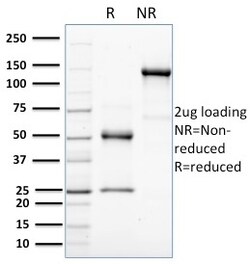
Biotium HER-4 / ERBB4(HFR-1), CF740 conjugate, 0.1mg/mL
The EGF receptor family comprises several related receptor tyrosine kinases that are frequently overexpressed in a variety of carcinomas. Members of this receptor family include EGFR (HER1), Neu (ErbB-2, HER2), ErbB-3 (HER3) and ErbB-4 (HER4), which form either homodimers or heterodimers upon ligand binding. The gene encoding ErbB-4 is expressed as a full-length protein, which produces a short membrane-anchored cytoplasmic domain fragment and a long ectodomain fragment. The short fragment is heavily tyrosine phosphorylated and possesses tyrosine kinase catalytic activity toward an exogenous substrate. Proteolytic cleavage of ErbB-4 is promoted by the binding of heregulin. ErbB-4 is involved in cell proliferation and differentiation and its expression is highest in breast carcinoma cell lines, normal skeletal muscle, heart, pituitary, brain and cerebellum. Its expression in breast cancer, pediatric brain cancer and other types of carcinomas has been reported in studies which sugges
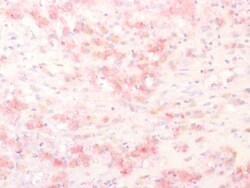
Biotium Tyrosinase-Related Protein-1 (TYRP-1) (Melanoma Marker), Biotin conjugate, 0.1mg/mL
Reacts with a 75 kDa melanocyte-specific gene product, identified as Tyrosinase-related protein-1 (TRP-1). It is involved in melanin synthesis. TRP1 is present on the melanosomal membranes of melanoma, normal melanocytes and nevi. Recent evidence suggests that TRP-1 is involved in maintaining stability of tyrosinase protein and modulating its catalytic activity. TRP-1 is also involved in maintenance of melanosome ultrastructure and affects melanocyte proliferation and cell death. Primary antibodies are available purified, or with a selection of fluorescent CF Dyes and other labels. CF Dyes offer exceptional brightness and photostability. Note: Conjugates of blue fluorescent dyes like CF405S and CF405M are not recommended for detecting low abundance targets, because blue dyes have lower fluorescence and can give higher non-specific background than other dye colors.
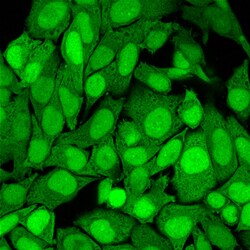
Biotium S100A4 (Marker of Tumor Metastasis) (S100A4/1482), CF740 conjugate, 0.1mg/mL
S100A4 belongs to the S100 super-family of proteins containing 2 EF-hand calcium-binding domains. S100 genes include at least 25 members, including S100A1-S100A18, trichohyalin, filaggrin, repetin, S100P, and S100Z. S100A4 exerts its function via direct interaction with a number of proteins including P53, P63, non-muscle myosin IIA, α6β4 integrin, and liprin b1. S100A4 is overexpressed in highly metastatic cancers, which makes it useful as a marker of tumor progression.Primary antibodies are available purified, or with a selection of fluorescent CF Dyes and other labels. CF Dyes offer exceptional brightness and photostability. Note: Conjugates of blue fluorescent dyes like CF405S and CF405M are not recommended for detecting low abundance targets, because blue dyes have lower fluorescence and can give higher non-specific background than other dye colors.
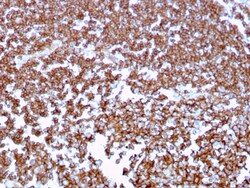
Biotium CD20 / MS4A1 (B-Cell Marker)(MS4A1/3409), CF488A conjugate, 0.1mg/mL
Recognizes a protein of 30-33 kDa, which is identified as CD20. It is a non-Ig differentiation antigen of B-cells and its expression is restricted to normal and neoplastic B-cells, being absent from all other leukocytes and tissues. CD20 is expressed by pre-B-cells and persists during all stages of B-cell maturation but is lost upon terminal differentiation into plasma cells. This MAb can be used for immunophenotyping of leukemia and malignant cells, B lymphocyte detection in peripheral blood and B cell localization in tissues. It reacts with the majority of B-cells present in peripheral blood and lymphoid tissues and their derived lymphomas. In lymphoid tissue, germinal center blasts and B-immunoblasts are particularly reactive. It is a reliable antibody for ascribing a B-cell phenotype in known lymphoid tissues. Rarely, CD20-positive T-cell lymphomas have been reported. Reactivity has also been noted with Reed-Sternberg cells in cases of Hodgkin's disease, particularly of l

Biotium CLEC9A(1F6), CF488A conjugate, 0.1mg/mL
This Mab recognizes Mouse DNGR-1, which is also known as CLEC9A, which is a highly specific marker of the CD8a and the CD103 DC subsets, as well as a receptor able to recognize a preformed signal exposed on necrotic cells. In peripheral blood, it is highly restricted on the surface of BDCA31( ) dendritic cells and on a small subset of CD14( ) and CD16(-) monocytes.Primary antibodies are available purified, or with a selection of fluorescent CF Dyes and other labels. CF Dyes offer exceptional brightness and photostability. Note: Conjugates of blue fluorescent dyes like CF405S and CF405M are not recommended for detecting low abundance targets, because blue dyes have lower fluorescence and can give higher non-specific background than other dye colors.
Biotium Melanoma Associated Antigen (MAA)(MAA/1414), CF488A conjugate, 0.1mg/mL
The antibody reacts strongly with melanoma cells derived from cell lines and short-term cultures and reacts preferentially with melanoma cells in frozen tissue sections. The antibody can also be used to detect melanoma lesions in vivo. Primary antibodies are available purified, or with a selection of fluorescent CF Dyes and other labels. CF Dyes offer exceptional brightness and photostability. Note: Conjugates of blue fluorescent dyes like CF405S and CF405M are not recommended for detecting low abundance targets, because blue dyes have lower fluorescence and can give higher non-specific background than other dye colors.
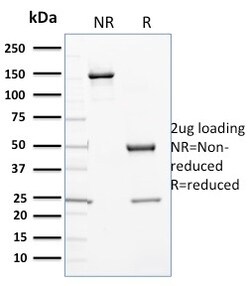
Biotium Cytochrome P450 3A1 / CYP3A1(P6), 0.2mg/mL
Cytochrome P450 oxidase (commonly abbreviated CYP) is a generic term for a large number of related, but distinct, oxidative enzymes important in vertebrate physiology. The cytochrome P450 mixed-function monooxygenase system is probably the most important element of Phase I metabolism in mammals. P450s are membrane-bound, either in the inner membrane of mitochondria or in the endoplasmic reticulum of cells where they metabolise thousands of endogenous and exogenous compounds. In the liver, these substrates include toxins, drugs, and other unneeded and potentially harmful molecules. Humans have 18 families of cytochrome P450 genes and 43 subfamilies; the CYP1 family is involved in drug metabolism and includes 3 subfamilies, 3 genes and 1 pseudogene. The CYP2 family are part of the microsomal drug metabolising system that is responsible for oxidation of many therapeutic agents as well as steroids, fatty acids and many other endogenous substances. Cytochrome P450 3A4 is abundantl
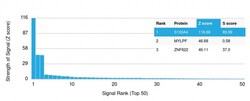
Biotium S100A4 / Metastasin / Calvasculin (Marker of Tumor Metastasis)(CPTC-S100A4-3), CF740 conjugate, 0.1mg/mL
S100A4 belongs to the S100 super-family of proteins containing 2 EF-hand calcium-binding domains. S100A4 has been implicated in the progression and prognosis of several forms of human cancer, e. g. breast, colorectal, gastric, pancreatic and bladder cancer, SCLC and oesophageal squamous cell carcinoma, among others. Poor prognosis associated with high S100A4 expression is accompanied by clear signs of disease progression, e. g. high histological and clinical grades and involvement of lymph nodes. Also indicative of poor prognosis is high S100A4 expression coupled with reduced E-cadherin expression in pancreatic, oral squamous cell carcinoma and in melanoma. S100A4 expression is inversely related with expression of metastasis suppressor nm23 and with prognosis of breast cancer. S100A4 is overexpressed in highly metastatic cancers, which makes it useful as a marker of tumor progression. Primary antibodies are available purified, or with a selection of fluorescent CF Dyes and other
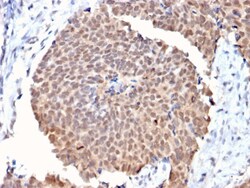
Biotium Fas (TNFRSF6) associated factor 1(CPTC-FAF1-2), CF740 conjugate, 0.1mg/mL
In contrast to growth factors which promote cell proliferation, FAS ligand (FAS-L) and the tumor necrosis factors (TNFs) rapidly induce apoptosis. Cellular response to FAS-L and TNF is mediated by structurally related receptors containing a conserved 'death domain' and belonging to the TNF receptor superfamily. TRADD, FADD and RIP are FAS/TNF-RI interacting proteins that contain a death domain homologous region (DDH). TRADD (TNF-RI-associated death domain) and FADD (FAS-associated death domain) associate with the death domains of both FAS and TNF-RI via their DDH regions, while RIP associates exclusively with FAS. An additional FAS interacting protein designated FAF1, for FAS-associated protein factor-1, binds with the cytoplasmic tail of wildtype but not LPR mutant FAS. When overexpressed in cells, FAF1 enhances the efficiency of FAS-mediated apoptosis. In contrast to TRADD, FADD and RIP, FAF1 lacks a DDH and cannot induce apoptosis independently of FAS activation. Primary antibo
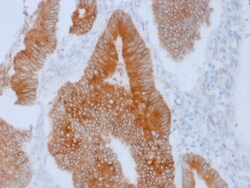
Biotium Aurora B (Proliferation Marker)(AURKB/1592), CF568 conjugate, 0.1mg/mL
This antibody recognizes a protein of 39 kDa, which is identified as Aurora kinase B (or Aurora B). Aurora B is a serine/threonine protein kinase and component of the chromosomal passenger complex (CPC), a complex that acts as a key regulator of mitosis. It is important for accurate chromosome segregation, cytokinesis, protein localization to the centromere and kinetochore, correct microtubule-kinetochore attachment, and regulation of the mitotic checkpoint. Aurora B forms a tight complex with inner centrosome protein and survivin. Inactivation of any of these proteins causes similar defects in chromosome segregation. A significant overexpression of Aurora B has been found in a variety of human tumors including non-small cell lung carcinoma, astrocytoma, seminoma and carcinomas of the colon, prostate, endometrium and thyroid. The expression level of Aurora B is associated with cell proliferation and prognosis in these tumors. Primary antibodies are available purified, or with
Biotium CD11c (Dendritic Cell Marker) ( ITGAX/1243) , CF647 conjugate, 0.1mg/mL
This antibody recognizes a protein of 145 kDa, identified as CD11c. CD11c (ITGAX), a member of the leukointegrin family, shares the same beta subunit with other members of the leukocyte adhesion molecule family, which includes CD11a (LFA-1), CD11b (MAC-1) and CD11d (ITGAD), but has a unique alpha chain. CD11c has been shown to play a role in phagocytosis, cell migration, and cytokine production by monocytes/macrophages as well as induction of T-cell proliferation by Langerhans cells. CD11c is expressed prominently on the plasma membranes of monocytes, tissue macrophages, NK cells, and most dendritic cells (DCs). A lower level of expression is also observed on neutrophils as a result of its high level of expression on most DCs. An antibody to CD11c may aid in identification of lesions with histiocytic origin. It may also been used as a marker for hairy cell leukemia in paraffin-embedded tissues.Primary antibodies are available purified, or with a selection of fluorescent CF Dyes a